
Metabolic Rhythm Support
Support balanced daily metabolic rhythm and stability.
This pathway belongs first to Metabolic Balance and can also connect with Digestive Comfort, Energy & Focus when additional context is useful.
Focus Areas Connected


RELATED FOCUS AREA
Digestive Comfort
Adds useful context when the support need crosses domains.

RELATED FOCUS AREA
Energy & Focus
Adds useful context when the support need crosses domains.
How We Support (Methods / Pathways)
Daily timing rhythmKeep meals, movement, and rest connected across the day.
Choose dependable parts of the day when nourishment normally fits, then protect those opportunities from being repeatedly pushed aside by work or errands. The exact times can remain flexible; the useful part is having recognisable meal windows that keep the day from becoming a long series of unplanned gaps. Use “Daily timing rhythm” as one flexible support cue within Metabolic Rhythm Support, rather than a stand-alone rule that has to be followed exactly.
Movement after sittingUse small movement cues after long inactive blocks.
Use ordinary transitions to interrupt long periods of stillness: stand and walk after a meeting, take the stairs for one short trip, or move for a few minutes before starting the next work block. Small bouts count because the purpose is to create a more regular movement rhythm, not to turn every break into a workout. Within Metabolic Rhythm Support, “Movement after sitting” should stay flexible enough to fit an ordinary day rather than becoming a fixed rule.
Energy pattern awarenessNotice when energy feels steady or uneven.
Use a short, neutral check-in to notice what is present before deciding what the day should look like. Consider energy, hunger, tension, workload, or available time, then make one proportionate adjustment rather than judging the whole routine. Within Metabolic Rhythm Support, “Energy pattern awareness” should stay flexible enough to fit an ordinary day rather than becoming a fixed rule.
Sleep and nourishment linkProtect evening rhythm as part of daily metabolic balance.
Keep evening nourishment and the wind-down routine coordinated rather than viewing them as completely separate parts of the day. Avoid repeatedly pushing meals or heavy decision-making into the final moments before rest, and use a broadly consistent evening sequence that fits your normal schedule. Keep “Sleep and nourishment link” proportionate to the rest of the Metabolic Rhythm Support routine and simplify it if it becomes hard to repeat.
Consistent basicsBuild from repeatable basics before adding complexity.
Choose a small set of basics that remain useful when the week becomes busy—regular nourishment, movement, daylight, rest, and a workable daily rhythm. Protect those first before adding optional steps, because a simple foundation is easier to carry through changing schedules. Within Metabolic Rhythm Support, “Consistent basics” should stay flexible enough to fit an ordinary day rather than becoming a fixed rule.
Related Ways to Support
Energy Stabilization
A connected support pathway for additional daily context.
Satiety & Balance Support
A connected support pathway for additional daily context.
Explore Related Topics
Metabolic Rhythm & Daily Stability
Explore the topic neighbourhood connected to this support pathway.
Featured Guides & Articles
Related Objectives
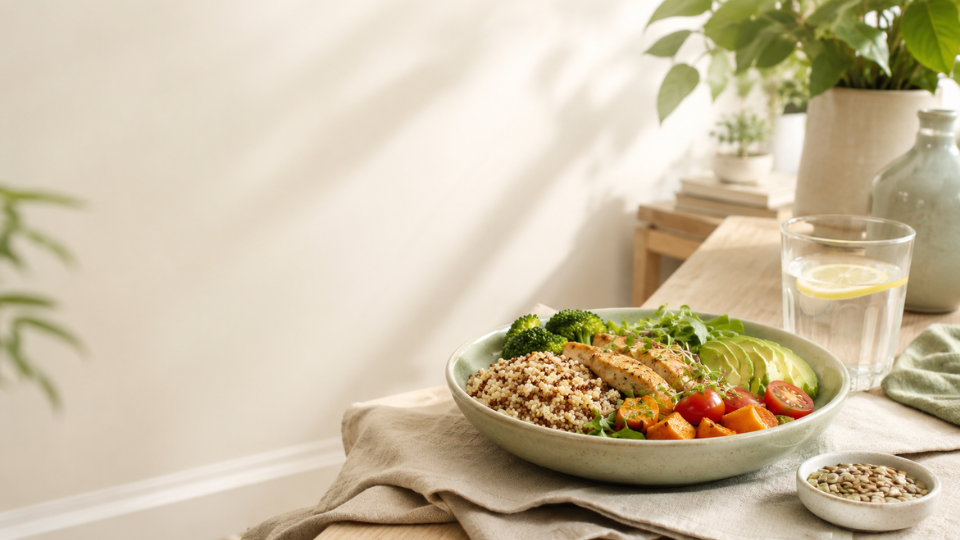
Metabolic Balance
Explore support for “Balanced Nutrition & Metabolic Rhythm” through the most relevant focus areas and daily pathways.
Questions About Metabolic Rhythm Support
What does Metabolic Rhythm Support support?
Metabolic Rhythm Support supports a clearer daily structure around metabolic balance and related wellness routines.
Is this a fixed routine?
No. This page is an educational support pathway. It helps organise ideas and internal links, but it does not give a rigid plan or personal instruction.
Where should I go next?
Start with the connected focus area, then open the related topic or featured reading that best matches what you want to understand next.
Disclaimer: This content is educational wellness information and does not diagnose, treat, cure, or prevent any disease or condition. It is not a substitute for personalised medical advice.
Continue Exploring
Choose the focus area, topic, or objective that best matches your current priority, and continue through the governed GALMS knowledge structure.