

Bones & Movement
Support everyday mobility, movement comfort, and physical resilience.
This focus area connects movement comfort, mobility maintenance, and structural nourishment in a practical daily structure.
Why This Focus Area Matters
Bones & Movement organises everyday mobility, physical resilience, and structural nourishment so readers can keep movement support practical, gradual, and maintainable.
Read more about Bones & Movement
Movement is part of nearly every ordinary day: getting up, walking, working, carrying, reaching, climbing, and recovering after activity. When movement routines become irregular, daily life can feel less fluid and more demanding. A broad focus area is useful because mobility, resilience, recovery, and structural nourishment are connected but not identical needs.
Bones & Movement organises these needs into clear pathways. Everyday Mobility focuses on maintaining comfortable range and regular movement. Physical Resilience looks at how activity and recovery can be balanced over time. Structural Support provides educational context around the nourishment of bones, joints, and connective structures without presenting an ingredient or product as a complete solution.
The most useful routines are usually repeatable. Short walks, varied positions, gradual activity, sensible recovery time, and regular nourishment can form a stronger foundation than occasional intense efforts. This does not mean every day must look the same; it means the overall rhythm should support movement often enough to remain part of normal life.
This focus area connects with Circulation & Vitality because movement supports active flow and everyday energy. It also relates to Energy & Focus because physical comfort and energy management can affect how sustainable a workday or active day feels. Those connections provide context while keeping the page centred on movement and structural resilience.
A practical way to use this focus area
Begin by identifying whether the main goal is to move more comfortably, recover more consistently, or strengthen the foundations that support an active routine. That choice directs readers to the most relevant pathway and related articles.
Progress is easier to maintain when it fits the current level of activity. Use gradual changes, alternate activity with recovery, and favour routines that can continue during both busy and quieter weeks.
Building a sustainable Bones & Movement routine
A useful routine begins by choosing one clear anchor rather than trying to change everything at once. Within Bones & Movement, the primary pathways are Mobility Maintenance, Physical Resilience Support, Structural Nourishment. These pathways provide different entry points into the same focus area, so the most suitable starting point depends on the part of daily life that feels easiest to organise consistently. Begin with one small action, connect it to an existing moment in the day, and keep the first version simple enough to repeat during both calm and demanding weeks.
It can help to create three versions of the routine: a minimum version for busy days, a standard version for ordinary days, and a fuller version when more time and attention are available. The minimum version protects continuity, while the fuller version allows additional support through adjacent support pathways. This flexible structure avoids an all-or-nothing approach and makes it easier to notice which habits genuinely support comfort, rhythm, steadiness, or restoration over time.
Review the routine periodically rather than judging it after a single day. Look for patterns in consistency, daily comfort, energy, recovery, or ease of use, and adjust only one element at a time. Connections with Circulation & Vitality, Energy & Focus may also become useful when the same daily pattern crosses more than one area. The aim is not perfection or a rigid plan, but a maintainable structure that fits real life today. Persistent, unusual, or concerning changes should be discussed with an appropriately qualified healthcare professional.
- Move regularly across the day
- Vary posture and movement patterns
- Balance activity with recovery time
- Support consistent daily nourishment
- Increase demands gradually and sustainably
Primary Ways to Support
Mobility Maintenance
Supporting comfortable movement and physical flexibility
Physical Resilience Support
Supporting active daily movement and long-term resilience
Structural Nourishment
Supporting nourishment of bones, joints, and connective structure
Related Focus Areas

Circulation & Vitality
Support comfortable daily circulation, active flow, movement rhythm, and everyday vitality.

Energy & Focus
Support steady daytime energy, mental clarity, sustained focus, and balanced productivity.
Explore Related Topics
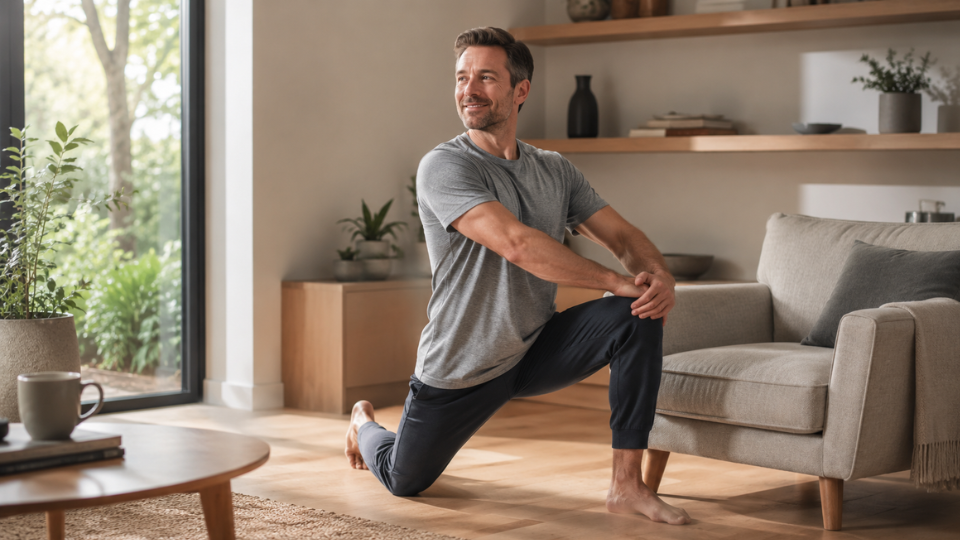
Everyday Mobility & Movement Comfort
Explore practical, wellness-safe guidance on everyday mobility & movement comfort and the daily routines connected with this topic.

Physical Resilience & Active Recovery
Explore practical, wellness-safe guidance on physical resilience & active recovery and the daily routines connected with this topic.

Structural Support & Movement Stability
Explore practical, wellness-safe guidance on structural support & movement stability and the daily routines connected with this topic.
Featured Reading
Everyday Movement and Physical Comfort
Practical guidance on mobility comfort within the Bones & Movement knowledge area.
Sustainable Mobility Through Daily Rhythm
Practical guidance on mobility rhythm within the Bones & Movement knowledge area.
Movement Balance and Active Recovery
Practical guidance on recovery balance within the Bones & Movement knowledge area.
Related Objectives

Everyday Mobility
Explore support for “Comfortable Everyday Movement” through the most relevant focus areas and daily pathways.

Physical Resilience
Explore support for “Long-Term Physical Resilience” through the most relevant focus areas and daily pathways.

Daily Recovery
Explore support for “Better Recovery After Demanding Days” through the most relevant focus areas and daily pathways.
Frequently Asked Questions
What does Bones & Movement cover?
It covers everyday mobility, active movement, physical resilience, recovery structure, and general nourishment of bones, joints, and connective tissues in wellness-safe language.
Is this a fitness or rehabilitation page?
No. It is an educational wellness hub. It does not provide rehabilitation, medical assessment, or a personalised exercise programme.
Which pathway should I explore first?
Choose Everyday Mobility for daily movement comfort, Physical Resilience for activity and recovery balance, or Structural Support for the nourishment and maintenance of physical structures.
How can movement support other focus areas?
Regular movement can connect with circulation, vitality, energy, and daily routine stability. These connections are presented as related areas rather than guaranteed outcomes.
Disclaimer: This content is educational wellness information and does not diagnose, treat, cure, or prevent any disease or condition. It is not a substitute for personalised medical advice.
Continue Exploring
Choose the pathway, topic, or objective that best matches your current priority, and continue through the governed GALMS knowledge structure.